A few myths need to be cleared up before we talk about this properly.
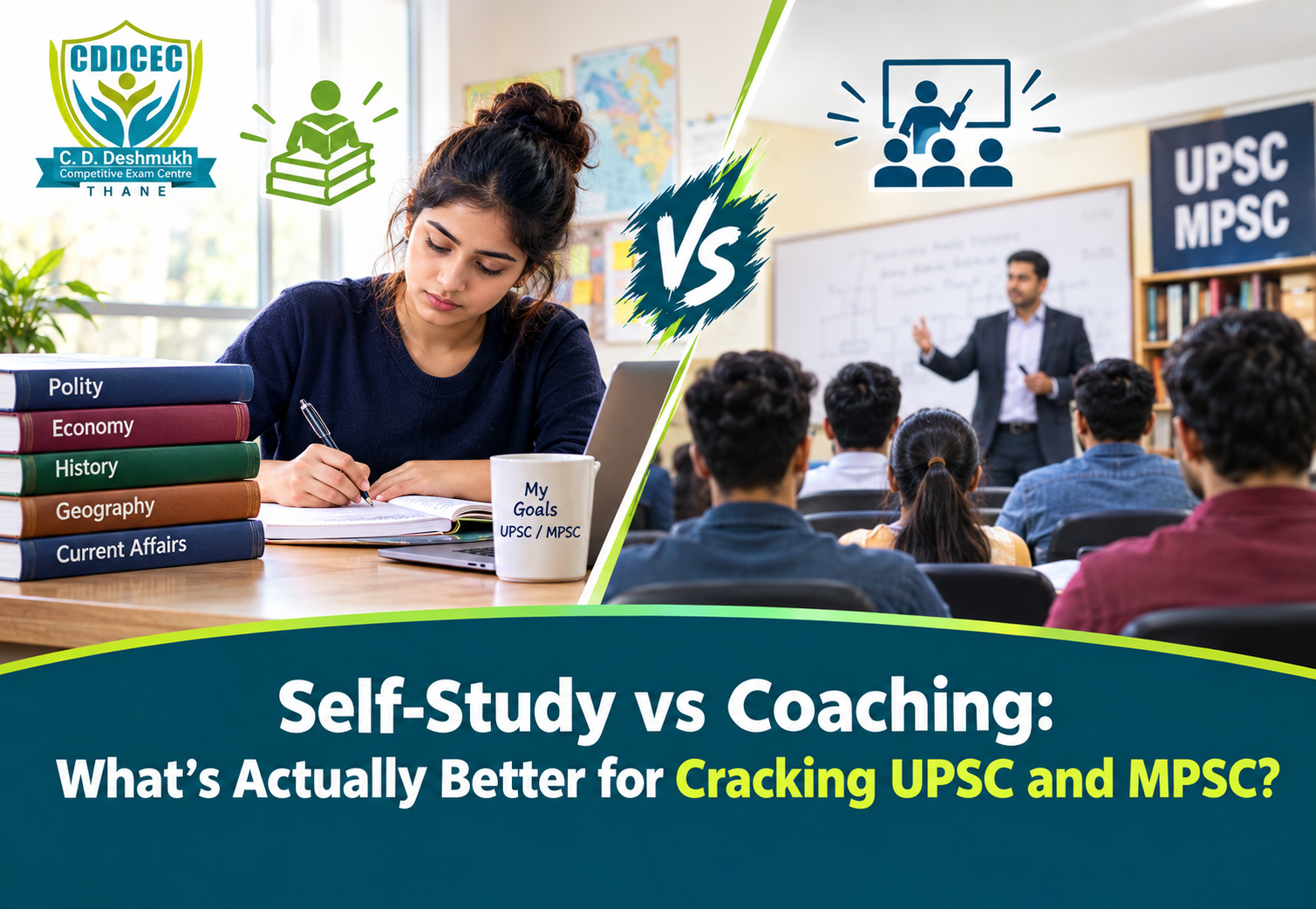
Myth one: ChatGPT can write your answers for you, and all you need to do is copy them down in the exam- it is not possible, the ever-evolving nature of the exam and the amount of knowledge command required to write structured answers is not present in AI, and if you try building your preparation around that idea, you will walk into the Mains hall with borrowed sentences and no actual understanding behind them.
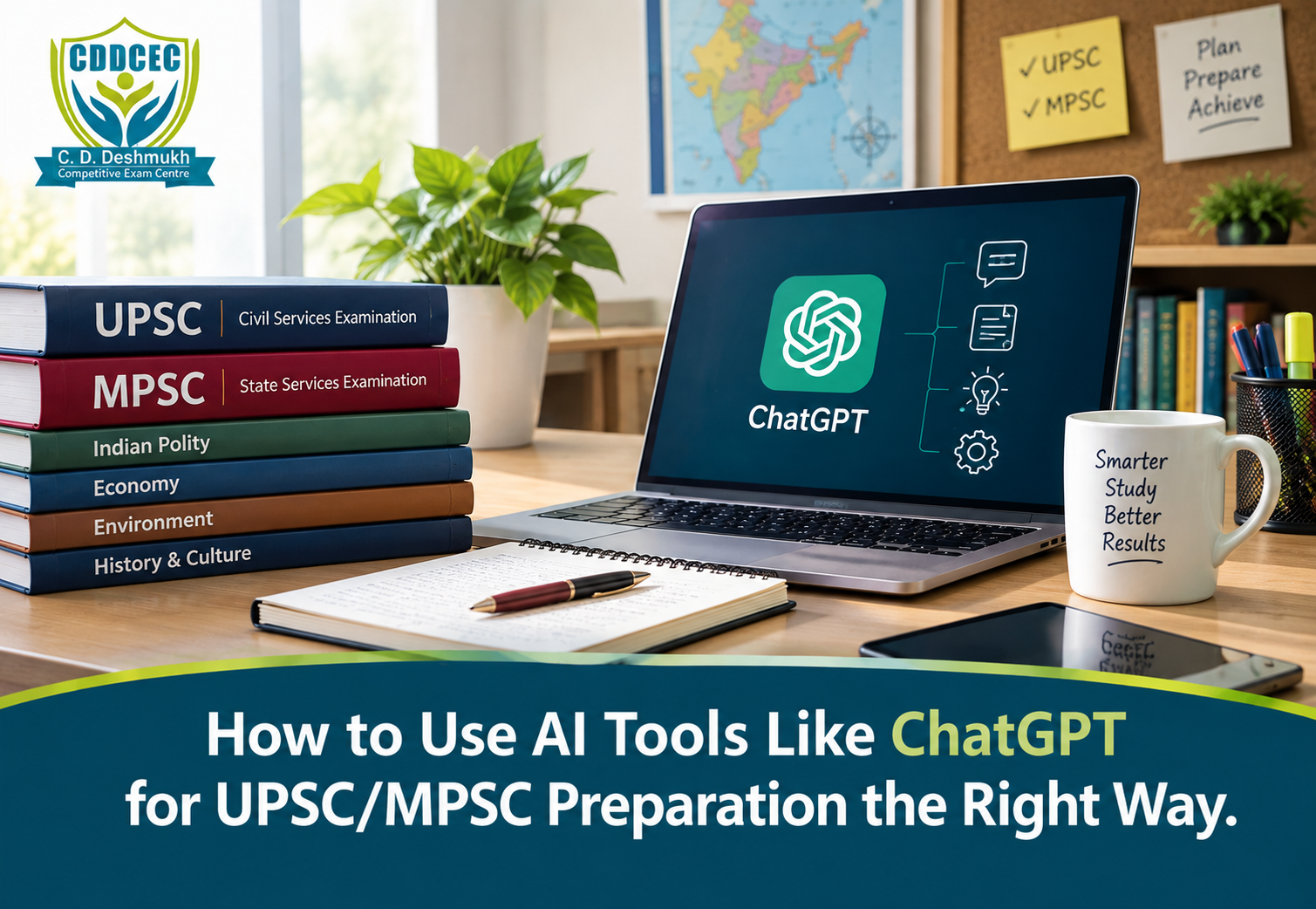
Myth two: AI tools have no place in UPSC or MPSC preparation because “serious aspirants stick to books.” That’s outdated thinking. Used correctly, ChatGPT for UPSC preparation can genuinely shave weeks off your revision timeline. Used carelessly, it can quietly wreck your answer-writing skills without you even noticing until the results come out. When it comes to Competitive exam preparation, usually people think that students just have to go through a pile of books and solve multiple test series, andthat’ss all, but the reality is that if you want to appear for any of these exams, you will have to be updated with all the important social, economic & geopolitical events going around. For this, one has to be technologically up to date as well, as Science and Technology is also a very important component of the syllabus.
Also, from the perspective of both the Public Service Commissions, they wish to recruit people who stay updated, who are keen on learning and adapting to new and upcoming technologies.
The difference between these two outcomes isn’t the tool. It’s how you use it.
Where ChatGPT Actually Helps a Civil Services Aspirant
Let’s be specific, because vague advice like “use AI to study smarter” helps nobody.
Breaking down dense topics fast: Ask it to explain a concept, say, the difference between judicial review and judicial activism, in plain language first, then ask it to layer in the constitutional articles and case references. This two-step approach gets you a working understanding before you go back to your base book for depth. Building quick revision notes: Feed it a chunk of a chapter and ask for a structured, point-wise summary. This won’t replace your own micro-notes; rather, it will give you well-structured Doomsday notes and a faster first pass before you condense it into your own words, which is really where the learning happens.
Practising answer structuring: This is where AI for MPSC preparation and UPSC prep genuinely overlap in usefulness. Paste a Mains-style question and ask ChatGPT to outline a structure – introduction, body with 3–4 dimensions, conclusion – without writing the actual content. Then you write the answer yourself, using that skeleton. This trains structure, which is one of the most under-practised skills among aspirants.
Simplifying current affairs: A dense editorial on a policy shift can be summarised into its core argument, the background context, and the likely exam angle. This saves real time when you’re trying to cover the newspaper every single day without losing three hours to one article.
Generating practice MCQs: Ask it to create objective-style questions from a topic you’ve just studied. It won’t match UPSC or MPSC’s exact question-setting style, but it’s a genuinely useful way to test recall immediately after reading.
Where It Becomes Dangerous: And Aspirants Don’t Realise It
Never let it write your answers for you: Civil Services answer writing isn’t about producing correct information. It’s about your ability to organise thought under time pressure, take a balanced stand, and express it in your own voice because the same skill is tested again, live, in the Interview. If ChatGPT has been writing your practice answers for months, you will freeze the day you actually have to write one yourself, under exam conditions, with no AI to lean on.
Don’t trust it blindly on facts. ChatGPT gets things wrong – dates, numbers, specific constitutional provisions, the exact wording of an article. For competitive exam prep, for ChatGPT to actually help rather than hurt you, every fact it gives you needs to be cross-checked against your standard reference material before it goes into your notes. Treat it as a first draft, never as a source.
Watch out for generic, “safe” opinions. Ask it an opinion-based question – say, on a controversial policy – and it will usually hand you a carefully balanced, somewhat toothless answer. That’s fine as a starting point, but if every candidate is asking the same tool the same question and getting similar phrasing back, your answers start sounding identical to a thousand other aspirants. Your own reading, your own conversations, your own reasoning is what actually makes an answer yours.
Don’t skip the writing practice. This is the biggest trap. It feels productive to have ChatGPT generate summaries and outlines all day – you cover more “content” per hour. But Mains is a handwritten, time-bound exam. The only way to get fast and fluent at that is to actually write, by hand, under time pressure, regularly. No amount of reading AI-generated content substitutes for that.
A Simple Way to Think About It
Treat ChatGPT the way you’d treat a well-read junior colleague – genuinely useful for a first explanation, a quick summary, or bouncing an idea around, but never the final authority, and never a substitute for doing the actual thinking yourself. Everything it gives you should go through your own verification, your own rewriting, your own understanding before it becomes part of your preparation.
Use it to save time on the mechanical parts of studying – summarising, structuring, generating quick practice questions. Never let it replace the parts of preparation that genuinely build you as a candidate: reading original material, forming your own opinions, and writing under pressure, again and again, until it becomes second nature.
The Bottom Line
AI tools are not selection shortcuts. They are, at best, a way to study smarter with the same effort – not less effort. Aspirants who use ChatGPT for UPSC preparation as a support tool, alongside disciplined reading and daily writing practice, tend to move faster through revision cycles. Aspirants who use it as a replacement for real study tend to discover the gap only when it’s too late to fix – usually somewhere in the middle of the Mains answer sheet.
At C D Deshmukh Institute, we’ve always believed that no shortcut replaces the fundamentals – solid conceptual clarity, disciplined answer writing, and honest self-evaluation. AI tools can support that process. They cannot replace it. Use them the way you’d use any good resource: with judgment, with verification, and with the understanding that the exam, in the end, is testing you – not the tool you used to prepare.